




UAN 26+4S
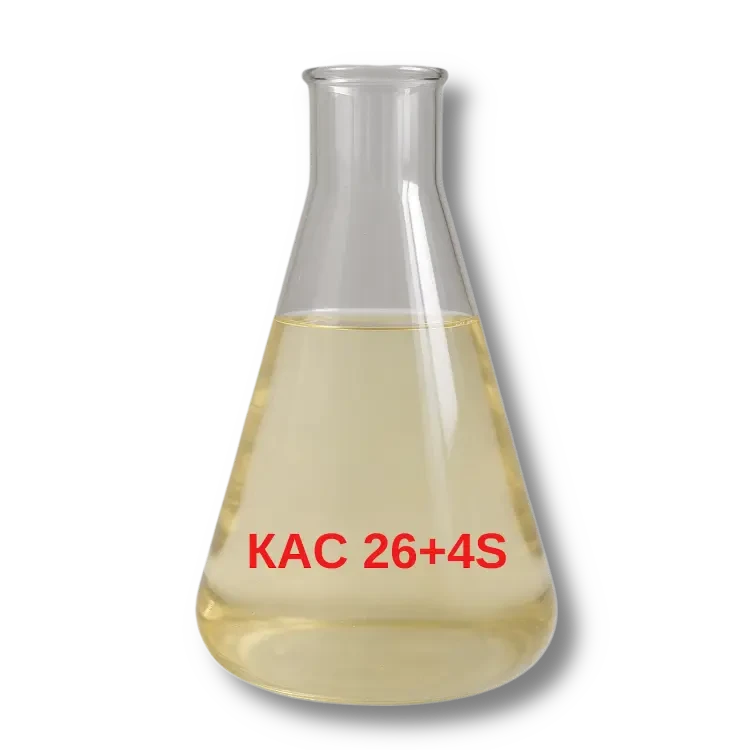
Liquid nitrogen fertilizer "UAN 26+4S"
Urea ammonium nitrate solution with sulfur (26% total nitrogen + 4% sulfur)
TU U 20.1-36584168-006:2019
Sales/packaging terms: EXW, FCA, bulk
Delivery terms: own transport across Ukraine or self-pickup
| LocationLocation | PricePrice |
|---|---|
| с. Хацьки, Черкаська обл. | 21 000 |
| с. Маяки, Вінницька обл. | 21 000 |
| м. Полтава, Полтавська обл. | 21 000 |
| м. Вознесенськ, Миколаївська обл. | 21 000 |
| м. Прилуки, Чернігівська обл. | 21 000* |
| м. Тернопіль, Тернопільська обл. | 21 000 |
Order: UAN 26+4S
UAN 26+4S is a concentrated liquid nitrogen fertilizer containing 24–26% total nitrogen in three forms: ammonium (NH₄⁺) — moderately retained in soil, provides stable nutrition; nitrate (NO₃⁻) — readily available but susceptible to leaching; amide (NH₂) — gradually mineralized, offering prolonged action. Additionally, it contains 4% sulfur in the sulfate form (SO₃), which is critical for:
- amino acid and protein synthesis;
- activation of nitrogen metabolism;
- enhanced nitrogen uptake efficiency.
The fertilizer is fully water-soluble, contains no mechanical impurities, and has a neutral to slightly alkaline pH (~7). It is suitable for a wide range of soil types, including acidic, sandy loam, and grey podzolic soils.
Recommended use:
- base application — before sowing with incorporation into soil;
- pre-sowing application — can be mixed with other fertilizers;
- top dressing during vegetation — for cereals, corn, rapeseed, and industrial crops;
- foliar application — in diluted concentrations (7–12%);
- fertigation — especially effective in intensive vegetable cultivation.
Limitations and warnings:
- avoid application during hot weather or high solar activity;
- do not apply to wet foliage without dilution;
- crystallization temperature –14…–17 °C;
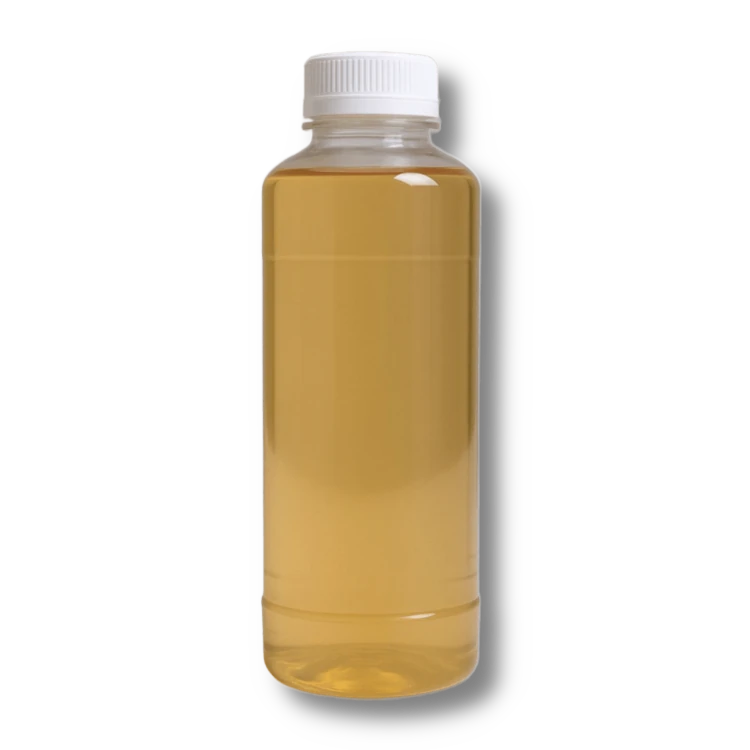
Appearance and color: Light yellow liquid with a characteristic odor of its components.
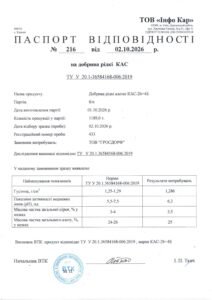
| Density, g/cm³ | 1,25 - 1,29 |
| Alkalinity, % | 0,01 - 0,5 |
| Mass fraction of ammonium nitrate, % | 18 - 26 |
| Mass fraction of urea, % | 29 - 37 |
| Mass fraction of ammonium sulfate, % | 14 - 18 |
| Mass fraction of water, % | 40 - 20 |
| Mass fraction of sulfur, % | 3 - 4 |
| Mass fraction of total nitrogen, % | 24 - 26 |
- store in airtight, sealed containers such as IBC tanks, corrosion-resistant reservoirs, or tanker trucks;
- storage area must be protected from direct sunlight, precipitation, and temperature extremes;
- optimal storage temperature: +5 °C to +25 °C;
- Crystallization temperature: –14 °C;
- prevent contamination with foreign matter (soil, crop protection products, pesticides, water);
- do not discharge into sewers or water bodies — disposal must comply with current environmental regulations.
Not recommended: do not store below 0 °C or in contact with unprotected carbon steel — risk of crystallization or stratification due to sulfate content.
Guaranteed shelf life: when stored and transported under proper conditions, the product remains usable for 6 months from the production date. After the expiration of the guaranteed storage period, the fertilizer must be tested for compliance with technical requirements before use.
| Crop | Application period / rate (kg/are) | Special application conditions | |||
|---|---|---|---|---|---|
| Pre-sowing cultivation | Spring regrowth stage / 2–3 leaf pairs*, **start of vegetation | Before stem elongation, fertilization* | Heading stage | ||
| Cereal сrops | |||||
| Winter wheat, winter rye | - | 1,8-2,4 | - | - | spring regrowth, thinned crops |
| - | 0,9-1,2 | - | - | spring regrowth, optimal stand density | |
| - | - | 0,9 in a 1:2 water solution | - | before stem elongation/when combined with herbicide application – dilute 1:3 or 1:4 | |
| - | - | - | 0,3 | Heading stage / apply as needed using a 1:2 water solution | |
| Millet, buckwheat | 0,9-1,4 | - | - | - | before cultivation prior to sowing |
| Spring wheat | 1,86 | - | - | - | for basic tillage or cultivation on typical black soil |
| 2,74 | - | - | - | for main tillage or cultivation on leached chernozems and dark gray leached soils | |
| Spring triticale | 1,86 | - | - | - | in areas with insufficient moisture, apply entirely during pre-sowing cultivation. |
| Spring barley | 1,8-2,4 | - | - | - | applied prior to autumn plowing |
| 1,2-1,8 | - | - | - | during spring cultivation | |
| Maize | 1,8-3,0 | - | - | - | before autumn plowing / before spring cultivation |
| - | 0,9** | - | - | fertilization between rows before the 3–5 leaf stage, under adequate moisture conditions | |
| Oats | 1,0-1,8 | - | - | - | Increase the application rate by 30% after cereal precursors |
| Peas | 1,15 | - | - | - | before pre-sowing cultivation |
| Industrial crops | |||||
| Sunflower | 1,7 | - | - | - | apply during pre-sowing cultivation if nitrogen fertilizers were not applied, or in autumn during plowing |
| - | 1,0* | - | - | apply between rows with working into the soil in the phase of 2-3 pairs of true leaves | |
| - | 0,3-1,0* | - | - | or foliarly with a solution with water in a ratio of 1:3 | |
| Soybeans | 0,9 | - | - | - | before pre-sowing cultivation |
| Sugar beet | 2,7 | - | - | - | before pre-sowing cultivation |
| - | 0,9 | - | - | Foliar application at 1:3 dilution with water (if necessary, in the phase of 2-3 pairs of true leaves - before the phase of leaf closure in rows) | |
| Oilseeds | |||||
| Winter rape | 1,4 | - | - | - | for pre-sowing tillage, if nitrogen fertilizers were not applied or in the fall for plowing |
| - | *2.4-3.7 in a solution with water 1:2 | - | - | *when forming a leaf rosette (foliar) | |
| - | - | *1.2-2.4 in a solution with water 1:2 | - | in the phase of stem formation (foliar) | |
| Spring rapeseed | 1,4 | - | - | - | for pre-sowing cultivation |
| - | *2.4-3.7 in a solution with water 1:2 | - | - | *when forming a leaf rosette (foliar) | |
| - | - | *1.2-2.4 in a solution with water 1:2 | - | *in the phase of stem formation (foliar) | |
| Oil flax | 1,2 | - | - | - | before pre-sowing soil cultivation |
| Vegetables | |||||
| Tomatoes | 3,0-4,3 | - | - | - | during plowing |
| 2,4 | - | - | - | if no other nitrogen fertilization is planned | |
| 1,2 | - | - | - | if other nitrogen fertilizers are planned | |
| Peppers | 3,7-4,3 | - | - | - | during plowing |
| 2,4 | - | - | - | if no other nitrogen fertilization is planned | |
| 1,8 | - | - | - | when planning fertilization with other nitrogen fertilizers | |
| Zucchini | 3,0-3,7 | - | - | - | during plowing |
| 2,4 | - | - | - | if no other nitrogen fertilization is planned | |
| 1,5 | - | - | - | if other nitrogen fertilizers are planned | |
| Cucumber | 2,6-3,1 | - | - | - | during plowing |
| 2,1 | - | - | - | if no other nitrogen fertilization is planned | |
| 1,5 | - | - | - | if other nitrogen fertilizers are planned | |
| Aubergine | 2,4-3,7 | - | - | - | during plowing |
| 1,8 | - | - | - | if no other nitrogen fertilization is planned | |
| 0,6 | - | - | - | when planning fertilization with other nitrogen fertilizers | |
| Potatoes and other root crops | |||||
| Potatoes, table beets, carrots, radishes | 2,3 | - | - | - | apply to soil before pre-sowing cultivation. Can be used prior to sowing operations |
| Fruit trees and berry trees | |||||
| Apple tree | - | 2,9 | - | - | top dressing in the spring before flowering in a solution with water 1:2 |
| Pear tree | - | 2,1 | - | - | spring fertilization before flowering |
| Cherry tree | - | 3,5 | - | - | spring fertilization before flowering |
| Raspberry | 2,7 | - | - | - | spring fertilization before the start of vegetation |
| Wild Strawberry/Garden Strawberry | 1,8 | - | - | - | spring fertilization before vegetation starts, using a 1:2 water solution |
| Flowers and lawn grasses | |||||
| Rose | 2.3 in a solution with water in a ratio of 1:2 | first spring fertilization before vegetation (sap flow). Apply by watering under the bush at temperatures above 10°C, in the morning or evening, in calm, dry weather | |||
| second fertilization at the bud emergence stage, but before flowering. Apply by watering under the bush at temperatures above 10°C, in the morning or evening, in calm, dry weather | |||||
| Annual and perennial grasses | 1,9 | - | - | - | before cultivation prior to sowing |
Note: apply UAN at an air temperature not exceeding +15...+18 C. Apply after sunset (during the daytime, drops of the solution can create a lens effect, burning leaf tissue). Do not apply during rain and dew. Work with a large drop so as not to cause leaf burns